The technology used for marble

3 15 680x380

The technology used for marble quarrying and processing is very advanced internationally.
Factories in developed countries are fully automated which makes the industry highly capital
intensive. Though few factories in Egypt tend to acquire the latest technology, several factories still import second handed (sometimes outdated) machinery which is much lower in price. The main process that is highly automated in this industry is block cutting into plates, as doing this manually does not facilitate mass production. All other processes including polishing could be done either with fully automated equipment or with semi-automated or manual machines.

Technologies for the marble industry in Egypt are bought from Italy, Germany, Spain, India or Turkey. There are also some Egyptian machines that are produced in workshops copying the patent design of some of the imported machinery.
According to Mr. Ibrahim Ghaly, who is a main dealer of Italian and German suppliers of marble production lines in Egypt, Egypt has currently about 500 factories working in this industry. 400 factories or about 70% of the industry is located in Shak El Thoban in Katameyya, Cairo as mentioned earlier. The remaining 100 factories are scattered all over Egypt, primarily in the main cities or the capital of the governorates. According to several marble factory owners interviewed, factories cannot be located besides the quarries as quarries are usually located in remote areas. Accordingly, if factories are located right
besides the quarries, this will necessitate several requirements that are not feasible. Namely, the supply of water and electricity is insufficient as well as the needed infrastructure to ensure a minimal level of living standard for the workers. On the other hand, transportation of the finished product is much more complicated and risky, as the processed marble is very fragile while solid raw marble stone can be transported without concerns of fragility.

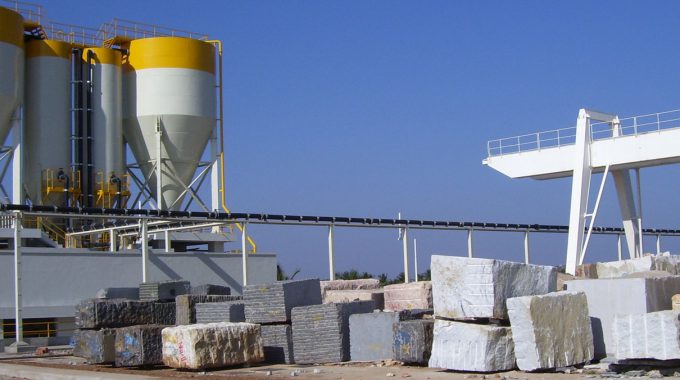
The Marble Industry is one of the oldest industries in the World. Ancient Civilizations in general and Ancient Egyptians in particular were very skillful in the utilization of the ornamental stones. In the old times this industry was labor intensive, but with the development of modern technology, this industry became relatively capital intensive and almost fully computerized in many countries of the world. In Egypt, this industry is still in development stage, in spite of its long history. Extraction of raw marble blocks from the quarries is an area that needs to be especially overviewed and regulated from an environmental standpoint. Currently, extraction practices include the excessive use of explosives which results in an enormous waste to natural resources as well as to the deformation of the extracted blocs of marble. This needs a change in extraction techniques towards using different tools such as diamond wires and automated bloc cutters to achieve standard sizes. Standardization of the size of the raw stone bloc increases the operational efficiency of the machines that handle the carrying and the cutting of the bloc, and leads to the standardization of the final product (in terms of quality) which is a requirement to
meet international standards of the industry. The marble industry in Egypt has the characteristics of a monopolistic competition market structure, where there are tangible barriers to entry, a high degree of product differentiation, and competition is driven by economies of scale and relative prices.
In general, the marble industry in Egypt has a good potential to prosper and to be one of the
driving forces for the country’s overall economic well-being especially as natural resources
abound. Regulating this important resource of the country is mandatory for sustainable
development. Moreover, improving the quality of the final product is key to invading the
international markets and establishing a reputation in this field. High profitability could lead to further market entry which may prove to attract more efficient production technology. This might lead to market segmentation, where value-driven and export-oriented firms will tend towards an oligopoly, whereas local-oriented cost-driven firms with relatively low technology will tend towards monopolistic competition. In all cases, to achieve a more competitive marble industry in Egypt in the long-run, effective government regulation is essential.
该技术用于大理石

3 15 680x380

用于大理石采石和加工的技术在国际上非常先进。
发达国家的工厂是完全自动化的,这使得该行业具有很高的资本
密集。尽管埃及很少有工厂倾向于采购最新技术,但几家工厂仍然进口价格低得多的二手(有时是过时的)机器。在这个行业中高度自动化的主要过程是将块切割成板,因为这样做手动不利于大规模生产。包括抛光在内的所有其他工艺可以使用全自动设备或半自动或手动机器完成。

埃及的大理石工业技术来自意大利,德国,西班牙,印度或土耳其。还有一些埃及机器是在研讨会上复制某些进口机器的专利设计。
根据意大利和德国埃及大理石生产线供应商的主要经销商Ibrahim Ghaly先生的说法,埃及目前约有500家工厂在这个行业工作。如前所述,400个工厂或约70%的工业位于开罗Katameyya的Shak El Thoban。其余的100家工厂遍布埃及,主要集中在主要城市或省份的首府。据接受采访的几位大理石工厂老板说,由于采石场通常位于偏远地区,因此除了采石场外,工厂不能安置。因此,如果工厂的位置正确
除了采石场外,这将需要几个不可行的要求。即供水和电力供应不足以及所需的基础设施,以确保工人的最低生活水平。另一方面,成品的运输更为复杂和风险,因为加工后的大理石非常脆弱,而固体原始大理石可以运输而不用担心易碎。

大理石工业是世界上最古老的工业之一。一般古代文明和古埃及人尤其擅长使用装饰石。在过去这个行业是劳动密集型的,但随着现代技术的发展,这个行业变得相对资本密集并且在世界上许多国家几乎完全电脑化。尽管埃及历史悠久,但它仍处于发展阶段。从采石场提取原始大理石块是一个需要从环境角度进行特别审查和管理的领域。目前,提取做法包括过度使用爆炸物,这会对自然资源造成巨大浪费,并对大理石提取的块体造成变形。这需要改变提取技术,以便使用不同的工具,例如金刚线和自动化刀具来达到标准尺寸。原石块尺寸的标准化提高了处理搬运和切割块的机器的操作效率,并且导致最终产品的标准化(在质量方面),这是要求
符合该行业的国际标准。埃及的大理石行业具有垄断竞争市场结构的特征,即进入门槛高,产品差异化程度高,竞争受到规模经济和相对价格的推动。
一般来说,埃及的大理石工业有很好的发展潜力,并成为其中的一员
特别是作为自然资源的国家整体经济福祉的驱动力量
盛产。规范该国的这一重要资源对于可持续性是强制性的
发展。而且,提高最终产品的质量是入侵企业的关键
国际市场并在这一领域建立声誉。高利润率可能导致进一步的市场进入,这可能被证明能够吸引更高效的生产技术。这可能导致市场分割,其中价值驱动型和出口导向型企业倾向于寡头垄断,而技术相对较低的地方导向型成本驱动型企业倾向于垄断竞争。在所有情况下,为了在埃及长期实现更具竞争力的大理石行业,有效的政府监管至关重要。

Технология, используемая для мрамора

3 15 680x380

Технология, используемая для производства и обработки мрамора, очень продвинута на международном уровне.
Фабрики в развитых странах полностью автоматизированы, что делает отрасль высокой капиталоемкостью
интенсивный. Хотя немногие заводы в Египте имеют тенденцию приобретать новейшие технологии, несколько заводов по-прежнему импортируют подержанные машины (иногда устаревшие), которые намного дешевле. Основным процессом, который является высокоавтоматизированным в этой отрасли, является резка на пластинах, так как это вручную не способствует массовому производству. Все остальные процессы, включая полировку, могут быть выполнены либо полностью автоматизированным оборудованием, либо полуавтоматическими или ручными машинами.

Технологии для мраморной промышленности в Египте покупаются в Италии, Германии, Испании, Индии или Турции. Есть также некоторые египетские машины, которые производятся в мастерских, копирующих патентный дизайн некоторых импортных машин.
По словам г-на Ибрагима Гали, который является основным дилером итальянских и немецких поставщиков мраморных производственных линий в Египте, в настоящее время в Египте насчитывается около 500 заводов, работающих в этой отрасли. 400 заводов или около 70% промышленности находится в Шак-эль-Тобан в Катамея, Каир, как упоминалось ранее. Остальные 100 заводов разбросаны по всему Египту, прежде всего в главных городах или в столице мухафаз. По мнению нескольких владельцев мраморных фабрик, заводы не могут быть расположены помимо карьеров, поскольку карьеры обычно расположены в отдаленных районах. Соответственно, если заводы расположены правильно
помимо карьеров, это потребует нескольких требований, которые невозможно выполнить. А именно, нехватка воды и электроэнергии недостаточна, а также необходимая инфраструктура для обеспечения минимального уровня жизни рабочих. С другой стороны, транспортировка готового продукта намного сложнее и рискованно, так как обработанный мрамор очень хрупкий, в то время как твердый необработанный мраморный камень может транспортироваться без проблем хрупкости.

Мраморная промышленность – одна из старейших отраслей в мире. Древние цивилизации вообще и древние египтяне в частности были очень умелыми в использовании декоративных камней. В прежние времена эта отрасль была трудоемкой, но с развитием современных технологий эта отрасль стала относительно капиталоемкой и почти полностью компьютеризирована во многих странах мира. В Египте эта отрасль все еще находится в стадии развития, несмотря на свою долгую историю. Добыча необработанных мраморных блоков из карьеров – это область, которая должна быть специально рассмотрена и отрегулирована с экологической точки зрения. В настоящее время методы добычи включают чрезмерное использование взрывчатых веществ, что приводит к огромным отходам для природных ресурсов, а также к деформации извлеченных блоков мрамора. Это требует изменения методов извлечения для использования различных инструментов, таких как алмазная проволока и автоматические фрезы для достижения стандартных размеров. Стандартизация размера необработанного каменного блока повышает операционную эффективность машин, которые обрабатывают перенос и резку блока, и приводит к стандартизации конечного продукта (с точки зрения качества), который является требованием к
соответствуют международным стандартам отрасли. Мраморная промышленность в Египте имеет характеристики монополистической структуры рынка конкуренции, где существуют ощутимые барьеры для входа, высокая степень дифференциации продукта, а конкуренция обусловлена ​​экономией масштаба и относительными ценами.
В целом, мраморная промышленность в Египте имеет хороший потенциал для процветания и быть одним из
движущие силы для общего экономического благосостояния страны, особенно в качестве природных ресурсов
имеются в большом количестве. Регулирование этого важного ресурса страны является обязательным для устойчивого
развитие. Кроме того, улучшение качества конечного продукта является ключом к вторжению в
международных рынках и репутации в этой области. Высокая рентабельность может привести к дальнейшему вступлению на рынок, что может оказаться привлекательным для более эффективных технологий производства. Это может привести к сегментации рынка, где ориентированные на стоимость и ориентированные на экспорт фирмы будут стремиться к олигополии, тогда как ориентированные на местные предприятия фирмы с относительно низкими технологиями будут стремиться к монополистической конкуренции. Во всех случаях для достижения более конкурентоспособной мраморной промышленности в Египте в долгосрочной перспективе необходимо эффективное государственное регулирование.

La tecnología utilizada para el mármol

3 15 680x380

La tecnología utilizada para la extracción y procesamiento de mármol está muy avanzada internacionalmente.
Las fábricas en los países desarrollados están completamente automatizadas, lo que hace que la industria tenga un gran capital
intensivo. Aunque pocas fábricas en Egipto tienden a adquirir la última tecnología, varias fábricas todavía importan maquinaria de segunda mano (a veces obsoleta) que tiene un precio mucho más bajo. El proceso principal que está altamente automatizado en esta industria es el corte en bloques en placas, ya que hacerlo manualmente no facilita la producción en masa. Todos los demás procesos, incluido el pulido, se pueden realizar con equipos totalmente automáticos o con máquinas semiautomáticas o manuales.

Las tecnologías para la industria del mármol en Egipto se compran en Italia, Alemania, España, India o Turquía. También hay algunas máquinas egipcias que se producen en talleres que copian el diseño de patentes de algunas de las máquinas importadas.
Según el Sr. Ibrahim Ghaly, que es un distribuidor principal de proveedores italianos y alemanes de líneas de producción de mármol en Egipto, Egipto tiene actualmente alrededor de 500 fábricas que trabajan en esta industria. 400 fábricas o aproximadamente el 70% de la industria se encuentra en Shak El Thoban en Katameyya, El Cairo, como se mencionó anteriormente. Las 100 fábricas restantes están diseminadas por todo Egipto, principalmente en las principales ciudades o en la capital de las gobernaciones. Según varios propietarios de fábricas de mármol entrevistados, las fábricas no pueden ubicarse además de las canteras, ya que las canteras suelen ubicarse en áreas remotas. En consecuencia, si las fábricas están ubicadas correctamente
además de las canteras, esto requerirá varios requisitos que no son factibles. A saber, el suministro de agua y electricidad es insuficiente, así como la infraestructura necesaria para garantizar un nivel mínimo de nivel de vida para los trabajadores. Por otro lado, el transporte del producto final es mucho más complicado y arriesgado, ya que el mármol procesado es muy frágil, mientras que el mármol en bruto puede transportarse sin preocupaciones de fragilidad.

La industria del mármol es una de las industrias más antiguas del mundo. Las civilizaciones antiguas en general y los antiguos egipcios en particular fueron muy hábiles en la utilización de las piedras ornamentales. En los viejos tiempos, esta industria requería mucha mano de obra, pero con el desarrollo de la tecnología moderna, esta industria se volvió relativamente intensiva en capital y casi totalmente informatizada en muchos países del mundo. En Egipto, esta industria todavía está en etapa de desarrollo, a pesar de su larga historia. La extracción de bloques de mármol crudo de las canteras es un área que necesita ser especialmente vista y regulada desde el punto de vista ambiental. Actualmente, las prácticas de extracción incluyen el uso excesivo de explosivos que resulta en un enorme desperdicio para los recursos naturales así como para la deformación de los bloques de mármol extraídos. Esto requiere un cambio en las técnicas de extracción para usar diferentes herramientas como alambres de diamante y cortadores de bloques automatizados para lograr tamaños estándar. La estandarización del tamaño del bloque de piedra en bruto aumenta la eficiencia operativa de las máquinas que manejan el transporte y el corte del bloque, y conduce a la estandarización del producto final (en términos de calidad), que es un requisito para
cumplir con los estándares internacionales de la industria. La industria del mármol en Egipto tiene las características de una estructura de mercado de competencia monopolística, donde existen barreras tangibles de entrada, un alto grado de diferenciación de productos y la competencia es impulsada por las economías de escala y los precios relativos.
En general, la industria del mármol en Egipto tiene un buen potencial para prosperar y ser uno de los
impulsar fuerzas para el bienestar económico general del país, especialmente como recursos naturales
abundar. La regulación de este importante recurso del país es obligatoria para la sostenibilidad
desarrollo. Además, mejorar la calidad del producto final es clave para invadir el
mercados internacionales y establecer una reputación en este campo. La alta rentabilidad podría conducir a una mayor penetración en el mercado que podría atraer una tecnología de producción más eficiente. Esto podría conducir a la segmentación del mercado, donde las empresas orientadas hacia el valor y orientadas a la exportación tenderán hacia un oligopolio, mientras que las empresas orientadas a los costos orientadas a los locales con una tecnología relativamente baja tenderán hacia la competencia monopólica. En todos los casos, para lograr una industria de mármol más competitiva en Egipto a largo plazo, la regulación gubernamental efectiva es esencial.

Scroll to Top